
One Root, Four Cups
Every Ginax tea starts the same way: American ginseng, grown in Southwestern Ontario.
What happens next is up to you. Keep it pure, or pair it with rose, hibiscus or ginger, three botanicals with long histories of their own.
Not sure which to pick? Here’s how each blend differs, and how to choose.
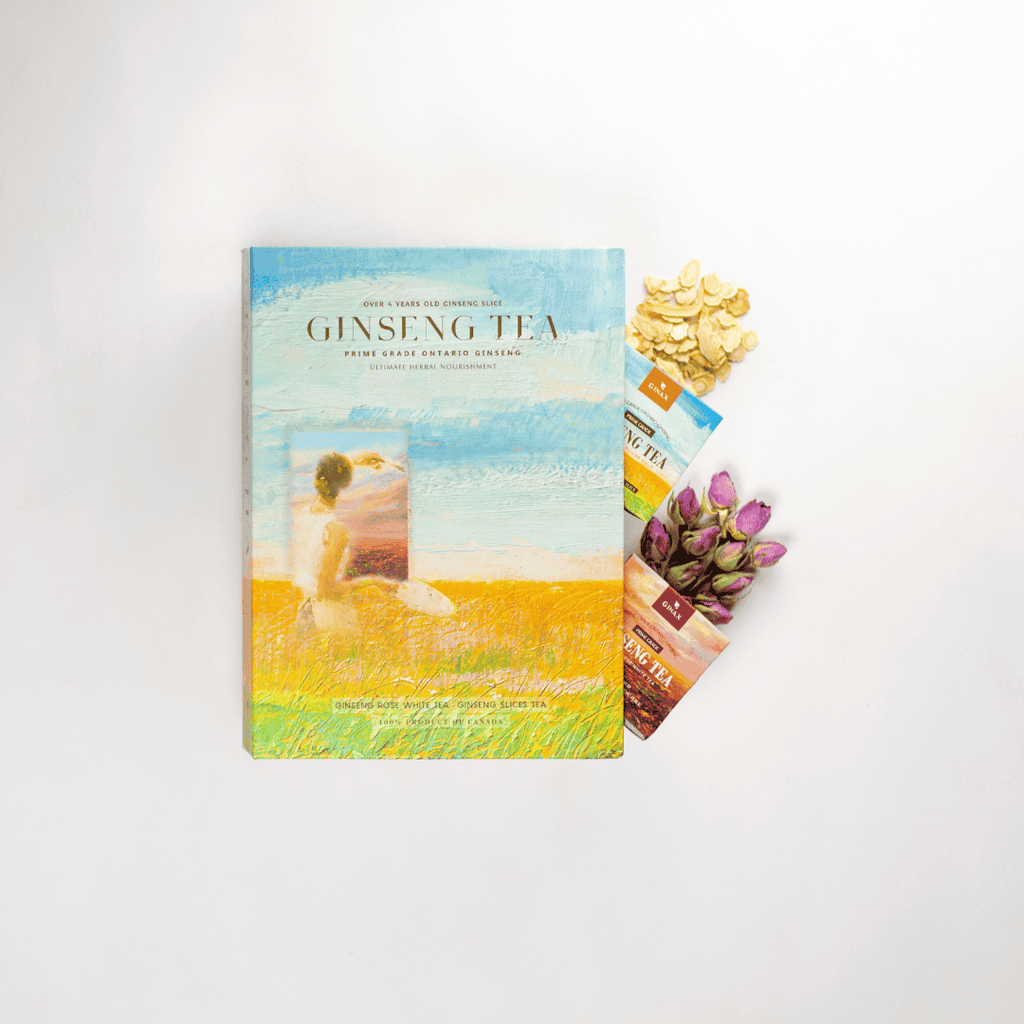
Pure or Blended?
Pure Ginseng: The Root, Unfiltered
American ginseng has a taste all its own: earthy, slightly sweet, with a bitter edge. Growers often describe it as closer to a bittersweet nut than a root, and milder than Asian ginseng.
Choose Pure if you want ginseng on its own terms, every day.
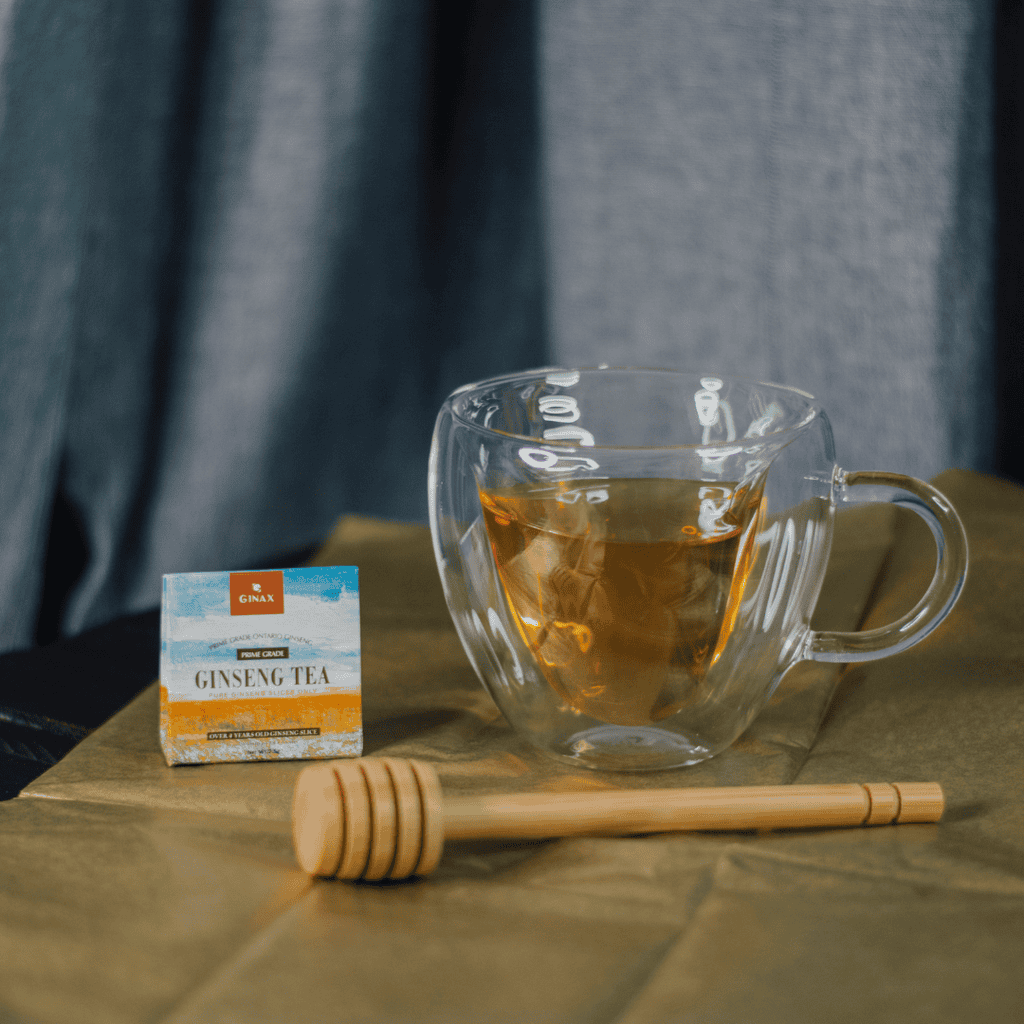
Blends: Ginseng Plus a Partner
A blend keeps the ginseng and adds a second botanical. It can soften that bitter edge and brings a flavour, and a tradition, of its own.
Choose a blend if you’re new to ginseng, or if you like variety from cup to cup.
Meet the Blends
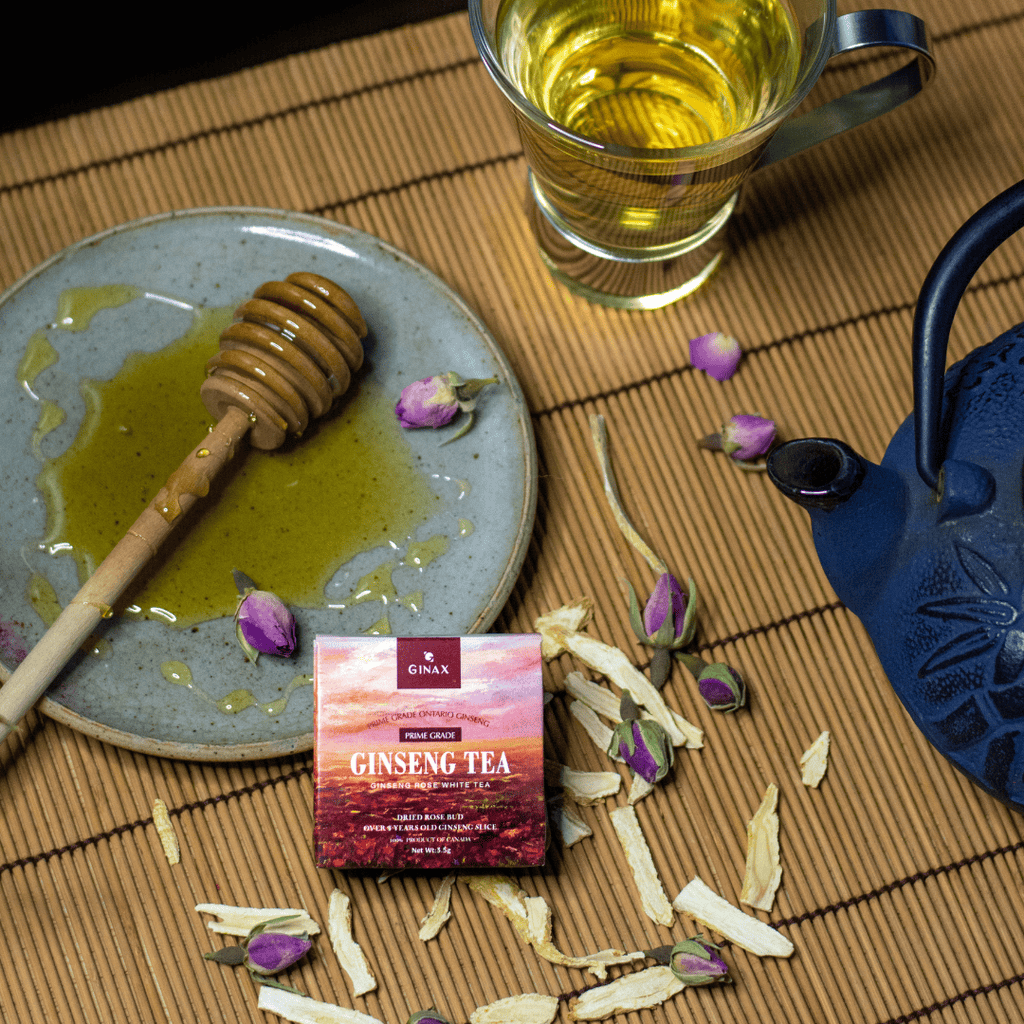
Ginseng & Rose: The Gentle One
Rose buds are a classic Chinese herbal tea, and are often added to black and oolong teas.
In traditional Chinese medicine, rose bud (mei gui hua) is considered warming and is used to keep qi moving and ease emotional tension. That’s tradition, not clinical proof, but it makes rose a natural partner for a calm afternoon cup.
Try it when: you want something soft and floral to slow down with.
Ginseng & Hibiscus: The Bright One
Hibiscus brings a deep red colour and a tart bite. In many countries it’s simply called “sour tea.”
It’s also one of the better-studied herbal teas. A 2025 overview of 26 randomized trials covering 1,797 people found hibiscus lowered blood pressure in a dose-dependent way, with a favourable safety record.
Try it when: you want a bright, tangy cup.
Ginseng & Ginger: The Warming One
Ginger has been used in food and folk medicine across Asia for centuries, especially for stomach discomfort.
Modern research is mixed. The U.S. National Center for Complementary and Integrative Health notes the strongest evidence is for pregnancy-related nausea, while results for other uses are limited or uncertain.
Try it when: it’s cold out and you want a cup with some spicy warmth.
A note on safety
Hibiscus may lower blood pressure further in people already prone to low blood pressure, and may interact with blood pressure medication. Ginger can interact with some medicines too. If you take medication or are pregnant, check with your healthcare provider first.
At a Glance
| Blend | Flavour | The partner’s story | Pick it for |
|---|---|---|---|
| Pure Ginseng | Earthy, bittersweet, nutty | Ontario-grown American ginseng, nothing added | Daily ritual, ginseng purists |
| Ginseng & Rose | Soft, floral | Traditional Chinese herbal tea for easing tension | Slowing down in the afternoon |
| Ginseng & Hibiscus | Tart, bright, deep red | Well-studied “sour tea” | A lively, tangy cup |
| Ginseng & Ginger | Spicy, warming | Centuries of culinary and folk use | Cold days |
All four are caffeine-free.
How to Find Your Blend
- Start with the Taster. It includes Pure, Rose, Hibiscus and Ginger, so you can try all four before committing.
- Match the moment. Rose to unwind, Hibiscus to brighten, Ginger to warm up, Pure for your daily ritual.
- Add honey if you like. A spoonful can soften ginseng’s bitter edge. Our Sweet Ginseng Gift Set includes a jar of artisan honey.
- Brew it your way. Ginax pods fit Nespresso OriginalLine machines. Prefer loose? Tea temples hold sliced 4-year roots.
- Rotate. Try keeping two blends on hand: one for mornings, one for afternoons.
Find your favourite. Shop Ginax ginseng teas →
Sources
- Ginger: Usefulness and Safety, National Center for Complementary and Integrative Health
- Efficacy and safety of Hibiscus sabdariffa in cardiometabolic health: an overview of reviews and updated dose-response meta-analysis, 2025
- Effect of Hibiscus sabdariffa on blood pressure in patients with stage 1 hypertension, J Adv Pharm Technol Res, 2019 (source for “sour tea”)
- Hibiscus tea: health benefits and risks, Medical News Today (low blood pressure caution)